
PACKAGING PRINTING: CREATIVITY AND SUSTAINABILITY IN MOTION

Between digital innovations, eco-friendly inks and traceability requirements, packaging printing is redefining its role at the heart of industrial chains. Far from being a mere decoration, it is becoming a strategic lever where aesthetics, performance and sustainability converge.
Packaging printing, long perceived as a finishing step, is now establishing itself as a strategic link in the chain. The global packaging printing sector is showing sustained growth, estimated at more than 6% per year according to The Business Research Company. In France, this momentum contrasts with the decline in commercial printing: packaging is driving the entire sector upwards, buoyed by the boom in the food, cosmetics and pharmaceutical markets. This structural change is altering expectations: colour accuracy, compatibility with sustainable substrates, shorter lead times, customised runs and the integration of variable data. The printer is becoming a technical and creative partner, serving to deliver a complete brand experience.
The rise of digital printing is transforming business models. High-definition inkjet and dry toner technologies enable short, adaptable print runs without any loss of quality. Brands can now customise their packaging by market, campaign or consumer. Variable data such as numbering, QR codes and adaptive graphics offer new opportunities for expression. Each piece of packaging becomes unique, without any major additional industrial costs. This flexibility is particularly appealing to e-commerce and cosmetics companies, which are seeking to strengthen customer loyalty while limiting waste. Digital printing also paves the way for greater energy efficiency: reduced set-up times, elimination of plates, and on-demand production.
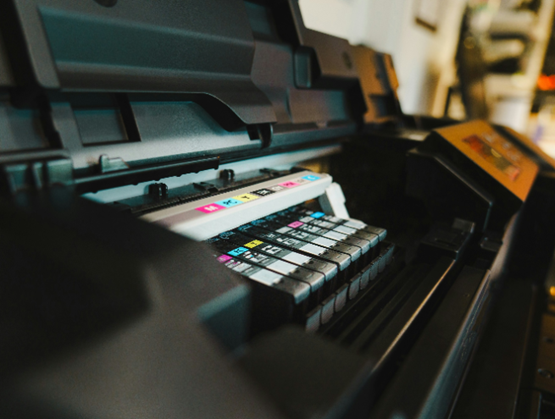
Eco-friendly inks and materials
In the face of European regulatory constraints, sustainability is becoming a central pillar. Water-based, UV LED and natural pigment-based inks are gradually replacing traditional solvents. Substrates are becoming lighter: high-strength recycled paper, bio-based films, cardboard from sustainably managed forests.
When printing becomes a vector of trust
Beyond its aesthetic dimension, printing now contributes to product security and traceability. Invisible markings, luminescent inks, micro-typography and dynamic QR codes are integrated into packaging to combat counterfeiting and enhance transparency. This convergence between printing and data opens up a whole new field: that of ‘smart printing’. Printed matter becomes a point of access to product information, origin, composition and recyclability, while remaining a sensory object. This dialogue between material and technology illustrates the evolution of the sector: making the invisible visible, without altering the beauty of the gesture.
This sector will be featured at the ALLFORPACK EMBALLAGE PARIS trade show from 24 to 26 November 2026 at Paris Nord Villepinte.
Image credit : Jakub Zerdzicki unsplash
Image credit : Cleverdis