
RE-GÉNÉRATION: SHOWCASING RESPONSIBLE PACKAGING

Changing materials, reducing the weight of packaging or organising its reuse involves several functions at once. Procurement assesses costs, R&D examines properties, production checks compatibility with equipment and logistics evaluates the impact on flows. For a supplier, presenting an innovation therefore means being able to answer a wide range of questions beyond simply describing the product.
The Re-Génération area at ALLFORPACK EMBALLAGE PARIS is positioned precisely at the meeting point between solutions and industrial needs. This new exhibition sector brings together approaches that are reshaping packaging practices: resource efficiency, circularity, traceability, responsible logistics and second life. For exhibiting companies, it provides a clearly identified setting in which to explain their technical proposition and seek the partners needed for its deployment.
A show that regenerates, an industry transforming its practices
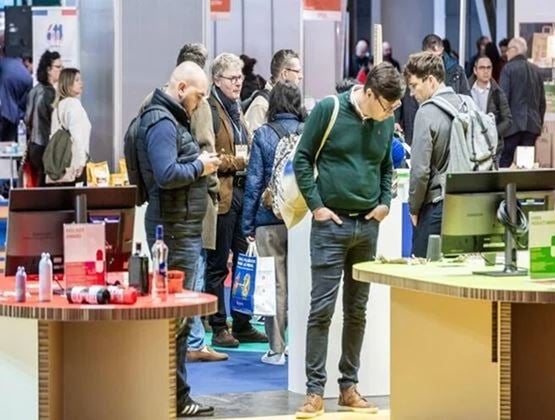
With its move to Paris Expo Porte de Versailles from 29 June to 1 July 2027, ALLFORPACK EMBALLAGE PARIS is evolving both its schedule and its setting. This new configuration aims to facilitate professional meetings and strengthen the show’s hands-on dimension, notably through an increased presence of machinery in demonstration.
Re-Génération gives this renewal a sector-specific expression. At packaging level, regeneration means questioning the amount of material used, the lifespan of a container, the conditions for its collection and the information needed to track it. The subject therefore covers materials, processes, services and the organisation of logistics chains.
For an exhibitor, this approach makes it possible to position an offer within a transformation affecting several stages of the value chain. A manufacturer of reusable containers can, for example, address return and washing conditions. A protective packaging specialist can explain the level of protection achieved with a reduced amount of material. The presentation becomes more precise when it links a product feature to an operational constraint.
Thematic visibility to make the offer easier to understand
At a global trade show, visitors need to identify quickly the suppliers likely to meet their needs. Grouping companies within Re-Génération provides an initial point of reference: the businesses present are all involved in transforming packaging and the way it is used.
This organisation is particularly relevant for companies whose activities sit at the crossroads of several areas. A traceability solution can involve container tracking, rotation management and the circulation of information between partners. Exhibiting it in an area dedicated to responsible uses makes it possible to present these applications together.
The visibility of the area is supported by signage, thematic visitor routes and dedicated communication initiatives. For a company with limited brand awareness, these touchpoints can help visitors identify its stand and discover its solutions.
The effectiveness of this presence also depends on what is presented. Samples, use cases and test results give visitors concrete ways to assess the relevance of an offer. A reduction in material use, for example, should be accompanied by information on strength, transport conditions and limitations of use. These details support a commercial discussion based on verifiable criteria.
Solutions presented through their applications
Resource efficiency is one of the main themes of the Re-Génération exhibition area at ALLFORPACK EMBALLAGE PARIS. It concerns packaging designed to use resources more efficiently. For suppliers, the challenge is to show how lightweighting, a change in format or a simplified structure can meet a specific need while maintaining the functions required to protect the product.
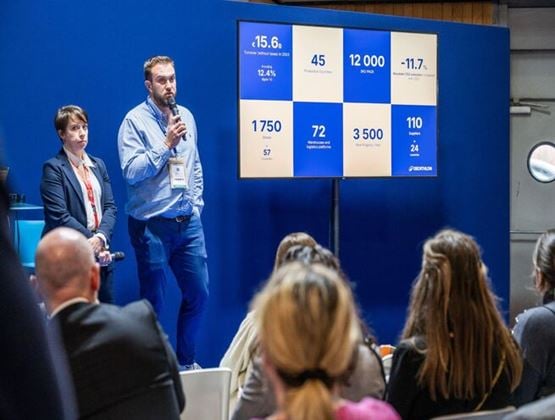
Circularity and reuse open up another area for discussion. Materials, container design, recovery and second life must be considered together. An exhibitor can, for example, explain the conditions under which its packaging is collected, reused or directed towards a treatment stream. In the case of reuse, the robustness of the container must be considered alongside return, inspection and recirculation operations.
Traceability and transparency concern the data that accompany these uses. Identifying packaging, tracking its journey or transmitting reliable information can facilitate coordination between manufacturers, users and logistics operators. Demonstrations are most effective when based on a concrete operation, such as tracking a fleet of containers or identifying a batch.
Responsible logistics completes this approach. Size, storage, handling and transport all influence the day-to-day performance of packaging. For companies developing solutions in these areas, Re-Génération makes it possible to place the product within its usage cycle and explain the changes it involves for teams.
Meeting the professionals involved in decision-making
This exhibition sector is aimed in particular at company directors, product managers, buyers and R&D managers in the food industry, industrial goods and e-commerce markets. Process and packaging managers, as well as professionals working in logistics, intralogistics and warehousing, are also among the target profiles.
This diversity matters for exhibitors. An initial discussion with a buyer may raise questions about cost or sourcing, while a conversation with production teams may focus on settings, throughput or handling. Bringing these perspectives together helps determine whether a solution can meet a project’s specifications.
The show can also help identify the complementary expertise required for deployment. A material may need to be combined with an appropriate conversion process; a reuse system may require partners capable of managing collection or washing. For participating companies, contacts between suppliers can therefore complement discussions with potential customers.
Preparing meetings therefore plays an important role. Defining priority sectors, specifying the volumes the offer can handle and providing accessible technical information make it possible to take discussions further. Depending on the maturity of the project, the objective may be a trial, a feasibility study or a meeting with the relevant teams.
Preparing participation tailored to your company
Re-Génération offers participation packages designed to make it easier to showcase solutions, with a turnkey approach or a configuration that can be built according to specific needs. The scheme combines physical presence with communication around companies and their innovations.
For a first participation, the challenge is to size the stand according to what needs to be shown. A hands-on sample, a demonstration and a technical discussion do not require the same layout. The choice also depends on the number of team members involved and the space needed to receive visitors.
Communication materials should extend this presentation. A concise information sheet can specify applications, usage constraints, supply capacities and the contact details of the appropriate person. Teams then have a useful document for following up after the show.
Companies can prepare their project via the registration form, specifying their activity, the solutions they wish to exhibit and the audiences they want to reach. This exchange makes it possible to define the participation arrangements for 2027, the associated services and the visibility options best suited to their offer.