
PACKAGING REUSE: MAKING THE ENTIRE LOOP WORK

What have been the major developments in packaging reuse in France in recent years?
Clara Mottier (Deloitte): The biggest change is that reuse is gradually moving beyond niche applications and isolated trials to become a major issue for industry.
We are seeing two trends. Some types of commercial packaging, such as pallets, crates, bins and drums, already circulate at a very large scale thanks to standardised formats, organised return systems and very high return rates. Household packaging reuse is still taking shape. The necessary infrastructure and processes are beginning to come together, with common standards, washing facilities, collection systems, traceability tools and joint projects involving several brands and retailers.
In my view, the biggest shift is from the product to the system as a whole. Once we have shown that a bottle or crate can be reused, we need to organise its circulation, return, washing and recirculation on a much larger scale. The regulatory framework is also accelerating this transition, with France’s AGEC law, the EU Packaging and Packaging Waste Regulation (PPWR) and extended producer responsibility (EPR) for commercial packaging.
Levels of maturity still vary widely across channels. Our latest study shows that in 2024, 24.2 million reusable household packaging units, excluding packaging for on-the-go consumption, were washed and put back on the market. Return rates can exceed 90% in some specialist channels and remain close to 30% in mainstream retail.
Many pilots have been launched, but few have reached industrial scale. Why is scaling up so difficult? What pitfalls should businesses avoid?
Clara Mottier: In my view, the first difficulty lies in how some pilots were designed. A lot of work has sometimes gone into the packaging itself. What needs testing is the entire loop, from production to recirculation, including storage, distribution, collection, return transport, sorting, washing and quality control.
The second issue is economic. It’s a chicken-and-egg problem involving volumes and costs. When volumes are too low, washing equipment and transport capacity are underused, keeping the cost per cycle high. That, in turn, can make brands and retailers reluctant to commit. Our study shows that equipment for washing household packaging, excluding packaging for on-the-go consumption, operates at an average of 30% of capacity. Under the current setup, existing facilities could already wash more than 67 million additional packaging units per year. Pooling volumes is therefore a priority.
Many pilots also rely on highly bespoke arrangements, such as a specific format, dedicated logistics or a proprietary deposit or traceability system. These choices can work on a small scale and then make it complex and costly to bring in new partners. Businesses also need to assess the scale of the changes to production. Depending on the setup, a minor adjustment to the line may be enough, or some equipment may need substantial modification or even replacement.
From the pilot stage, I therefore recommend testing the entire loop, prioritising formats that can be shared and factoring in storage, return logistics and any changes to production lines. It is also important to address health and safety requirements, washing quality and checks early on, and to clarify who invests, who operates the system, who bears the risks and how costs are shared.
Packaging has to be collected, sorted, washed and put back into circulation. What can businesses share to manage the cost of each cycle?
Clara Mottier: I would suggest sharing anything that does not truly give them a competitive advantage. That starts with packaging formats where possible. Common formats allow brands to use the same collection and transport networks, sorting equipment and washing facilities. That is the thinking behind the R-Cœur range. Each brand can still differentiate itself through the label, cap or lid while using the same container body.
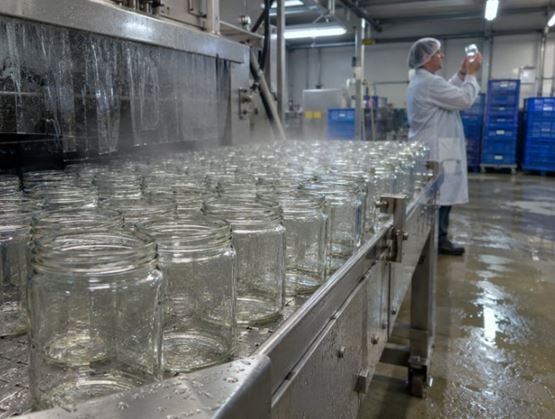
Businesses can also share collection points, consolidation hubs, return transport, washing capacity, storage space and inspection equipment. This helps avoid creating multiple loops that each handle too little volume. The most mature commercial reuse systems already use regional hubs and shared washing equipment. Coordinating return flows can also reduce empty journeys.
It also makes sense to agree on common rules and requirements for health and safety, quality control, traceability data and the management of packaging pools, along with settlement mechanisms between participants where relevant. This approach can use local or regional loops to keep transport distances down, provided their standards are compatible enough for the loops to work together.
On 24 November, the webinar will bring together case studies from ReUse, Les Mousquetaires and Agromousquetaires. What can businesses learn from these examples if they want to launch or expand a reuse project of their own?
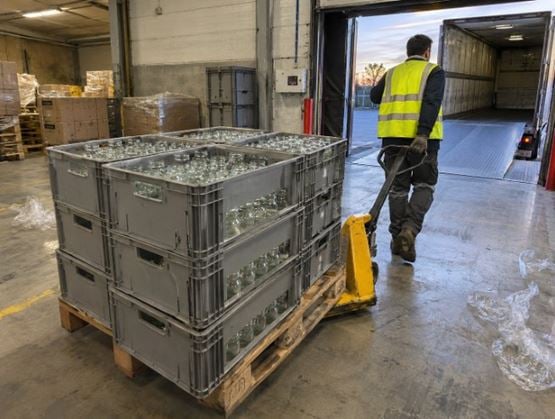
Clara Mottier: These three examples let us look at reuse from three complementary perspectives. ReUse shows how to organise a reuse loop across a region, bringing together several brands, stores, packaging standards, washing facilities and traceability tools, with a single operator coordinating the system. It shows how pilot projects can become part of a shared system.
Les Mousquetaires bring the retailer’s perspective. Their experience shows how reuse can fit into existing flows between suppliers, distribution centres and stores, and what that means for storage, returns management and teams’ day-to-day work.
Agromousquetaires brings the manufacturing perspective. Reusable packaging must be able to run on a packaging line at the required speed, meet health and safety requirements, undergo checks and re-enter the production process. In some setups, switching from single-use to reusable glass is relatively straightforward. A change in material or crate type can require much more extensive modifications.
I would highlight three lessons for any business looking to get started.
- Start with the flows you already have. Identify routes with consistent volumes, where returns can be organised and infrastructure is already in place.
- Build the project together from the start. Involve suppliers, retailers, operators, logistics providers, washing specialists, and production and quality teams early on. Each participant manages part of the loop.
- Standardise where possible. Each variation in format or process can add sorting, storage, washing or logistics costs and eventually make it harder to pool volumes.
Use what is already in place wherever it makes sense, whether that means a retailer’s return logistics network, its distribution centres or available washing capacity. Depending on the project, new investment may also be needed.
On 24 November, join Clara Mottier and the speakers at the ALLFORPACK EMBALLAGE PARIS webinar to hear about their experience and ask them your questions live.