
TOWARDS EUROPEAN HARMONISATION WITH REGULATION (EU) 2025/40

From August 2026, the PPWR (Packaging and Packaging Waste Regulation), formalised in Regulation (EU) 2025/40, will become fully applicable across all Member States of the European Union. While initial attention focused on waste reduction targets, recyclability and the incorporation of recycled content, another, more structural change deserves the attention of professionals: the revision of the naming of packaging categories.
Historically, the sector has been structured around three widely used concepts: primary packaging, secondary packaging and tertiary packaging. These terms, firmly rooted in industrial and logistics practices, do not disappear entirely from everyday vocabulary, but they are replaced in the European regulatory text by harmonised terminology: sales packaging, grouped packaging and transport packaging.
This terminological shift is not insignificant. It aims to align definitions across the entire European market, reduce ambiguities of interpretation between Member States and ensure the secure application of regulatory obligations.
From primary packaging to sales packaging
The former “primary packaging” is now referred to as “sales packaging”. While the change does not fundamentally alter its function, it clarifies its main purpose: to constitute a sales unit intended for the final user.
This refers to the packaging that is, in most cases, in direct contact with the product: beverage bottles, food pouches, cosmetic tubes, trays or pharmaceutical containers. This packaging fulfils protective, informational and marketing functions. It carries mandatory information, nutritional or technical details, and contributes to brand identity.
By adopting the term “sales packaging”, the PPWR places emphasis on the commercial purpose and the direct relationship with the final user. This clarification is decisive for the application of future requirements relating to eco-design, volume reduction, recyclability and the incorporation of recycled content.
For producers placing products on the market, this redefinition implies reviewing internal documentation, contracts, regulatory declarations and reporting systems to align categories with the new European terminology.
Secondary packaging becomes grouped packaging
The second change concerns “secondary packaging”, which is replaced by “grouped packaging”. Once again, the function remains similar, but the terminology becomes more descriptive.
Grouped packaging is used to assemble several sales units. This may include plastic film wrapping a pack of bottles, cardboard boxes grouping individual products, or multipack sleeves in large-scale retail. It facilitates handling, storage and, in some cases, shelf presentation.

The choice of the term “grouped” helps to avoid certain divergent interpretations observed across different Member States, where the boundary between secondary and tertiary packaging could vary depending on logistical contexts. The emphasis is now placed on the function of assembling several sales units, regardless of the place of use.
This clarification will have consequences for obligations relating to the reduction of unnecessary packaging, a central issue within the PPWR. Manufacturers will need to demonstrate the functional necessity of grouped packaging, particularly within B2C channels.
Tertiary packaging becomes transport packaging
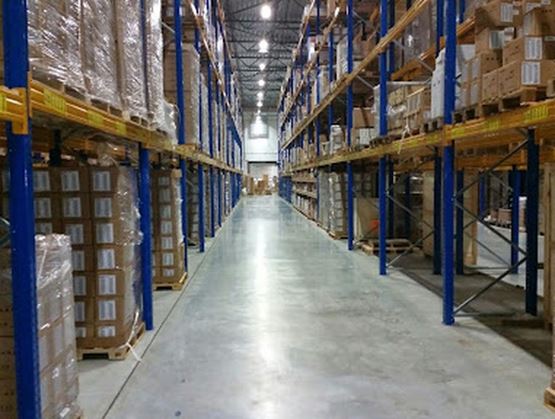
Finally, “tertiary packaging” is renamed “transport packaging”. The term is more explicit and directly linked to its function: facilitating the handling, storage and large-scale transport of goods.
This category includes pallets, transport cartons, logistics crates, as well as stretch films used to stabilise loads. This packaging is generally not intended for the final user, but operates within the upstream and downstream logistics chain.
In the context of the PPWR, transport packaging is subject to particular attention with regard to reuse, standardisation and flow optimisation. The terminological clarification will allow for more consistent application of requirements relating to reuse systems, particularly in B2B sectors.
Harmonisation in support of the single market
Beyond the change in terminology, the objective of the European Commission is to strengthen regulatory consistency across the entire territory of the Union. By harmonising definitions, the PPWR limits national divergences in interpretation and provides greater legal certainty for operators active in several markets.
For manufacturers, this means progressively adapting internal frameworks, compliance tools and training programmes. Regulatory, CSR, packaging and supply chain departments will need to work together to integrate these new terms into existing processes.
This transition forms part of a broader transformation of the packaging sector, where regulatory compliance is becoming as much a strategic lever as a constraint. A precise understanding of the new categories will determine the correct application of obligations related to recyclability, reuse and waste reduction.
A strategic issue for professionals gathered at ALLFORPACK EMBALLAGE PARIS
As the PPWR enters into force in August 2026, the classification of packaging is emerging as a structuring issue for the entire value chain. Packaging manufacturers, producers placing goods on the market, logistics operators, distributors and recycling stakeholders will need to integrate these new definitions into their strategies and operational tools.
In this context, the trade show ALLFORPACK EMBALLAGE PARIS provides a key platform to analyse the practical implications of Regulation (EU) 2025/40. The event brings together expertise from across the value chain, from design to end of life, and offers a forum for discussion on European harmonisation, compliance challenges and forthcoming industrial adaptations.
The new packaging classification introduced by the PPWR is not merely a lexical adjustment. It contributes to the structuring of a common language at European level, an essential prerequisite for the effective implementation of environmental objectives. For industry stakeholders, the priority now is to anticipate, align and integrate these developments into a coherent and sustainable industrial vision.
To explore these developments further and meet sector professionals, join ALLFORPACK EMBALLAGE PARIS from 29 June to 1st July at Paris Expo Porte de Versailles.
Image credits: Christian Lue - Unsplash/Kampus Production - Pexels/Tinguey Injury Law Firm - Unsplash/Handi Boyz LLC - Pexels