
AEP GROUP, PORTRAIT OF A FRENCH POLYETHYLENE FILM MANUFACTURER IN THE AGE OF THE PPWR

An industrial SME operating on a European scale
Based in the Haute-Loire department, in the Auvergne-Rhône-Alpes region, AEP Group operates four complementary production sites and a fifth logistics site of more than 6,500 m², opened in 2025. Together, these represent an extrusion capacity of around 24,000 tonnes of polyethylene per year, in addition to nearly 11,000 tonnes of flexo-printed films. This industrial density, rare for a French family-owned company, places the group among the significant mid-sized players in flexible plastic film in Western Europe.
The company’s story began in 1996 with the creation of Auvergne Emballages Plastiques. Three successive acquisitions, Dragon Moulier in 2004, Step Cornillon in 2005, and the formation of ADS Emballages the same year, consolidated the current scope, brought together under the AEP Group name from 2008. This external growth dynamic responds to a logic of local industrial continuity, with jobs systematically preserved during takeovers. Its multi-site presence now enables a back-up strategy between plants, a structuring factor for clients subject to supply continuity constraints.
Three complementary trades working with the same material
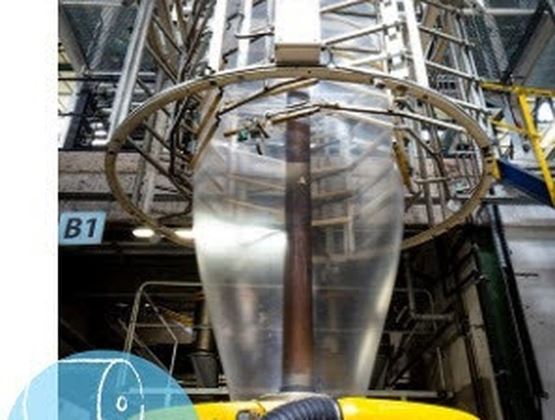
AEP Group’s industrial organisation is based on three integrated activities: extrusion, flexographic printing and bag making. Polyethylene is the only raw material processed by the company, a deliberate choice that guarantees the mono-material nature of the finished products and therefore their recyclability. Depending on the customer’s requirements, the material can incorporate specific additives, such as anti-UV, antistatic or slip agents, or be co-extruded to obtain particular mechanical properties.
The printing activity uses latest-generation eight-colour flexographic presses, certified HD Flexo. The two sites concerned operate with complete autonomy, from ink production to plate washing, guaranteeing industrial customers continuity of service in the event of a one-off failure. Bag making, concentrated on a single site, covers all standard formats, including 45° sealed flat-bottom bags, wicket bags and pre-cut formats on reels, with adjustable weights and dimensions.
This organisation enables AEP Group to serve eight different sectors, from primary packaging for frozen foods to industrial packaging for mattresses and road signs, as well as co-extruded secure envelopes used for high-value postal shipments. The food sector remains the main destination for the films produced, with a product typology that includes cushioning film, sealed food covers and high-definition printed collation films.
A regulatory timetable changing the rules
The context of ALLFORPACK EMBALLAGE PARIS 2026 coincides with the effective application, since 12 August 2026, of European Regulation 2025/40, known as the PPWR (Packaging and Packaging Waste Regulation). Published in the Official Journal of the European Union in January 2025, this text replaces the 1994 directive and gradually imposes a redesign of packaging placed on the market. According to the analysis by the eco-organisation Citeo on the changes to anticipate, the first structural measures will come into effect in 2027, with 2030 seen as a decisive milestone for universal recyclability.
The regulation notably introduces a recyclability classification from A to E, with only levels A, B and C authorising products to be placed on the market. This logic is pushing manufacturers towards mono-material packaging and gradually phasing out multi-material packaging, such as plastic-aluminium or plastic-cardboard combinations, considered poorly compatible with sorting streams. Analyses published by the Paris Île-de-France Chamber of Commerce and Industry on the implications of the PPWR also specify a timetable for the gradual introduction of mandatory recycled content for plastic packaging from 2028.
For a manufacturer such as AEP Group, the mono-material approach is therefore a structural asset: polyethylene, processed without being combined with other polymers, naturally offers excellent mechanical recyclability, provided it is properly collected and sorted.
Two key certifications for circularity
Beyond quality management (ISO 9001) and food safety (ISO 22000, FSSC 22000), AEP Group relies on two certifications specifically focused on the circular economy. ISCC Plus certification, obtained in 2021, validates the use of bio-based raw materials or materials derived from molecular recycling according to an international sustainability standard. The MORE 2022 label, the first European label of its kind, recognises the incorporation of recycled raw materials into finished products.
These two systems provide documented traceability, a central element of future PPWR compliance requirements. Plastics Recyclers Europe, the European organisation representing recyclers, now reports polyethylene film recycling capacities that continue to grow, with several million tonnes processed annually across Europe. The flexible films sector, long considered technically difficult, is progressing rapidly under the combined effect of industrial investment and regulatory pressure.
The company also claims an internal zero-waste approach, with systematic sorting and the reincorporation of production offcuts whenever this remains compatible with the customer’s specifications. Non-productive environmental investments, including LED lighting, heat recovery, treatment of volatile organic compounds and reuse of leftover inks, complete the system.
An in-house laboratory and company school
The research and development department, created in 2019, has invested in a laboratory extruder and a range of measuring instruments covering mechanical properties, including tensile strength, puncture and tear resistance, friction coefficients, melting temperatures (DSC), dimensional profiles and material testing using Fourier-transform infrared spectroscopy (FTIR). This infrastructure makes it possible to test new formulations, particularly those incorporating materials derived from chemical recycling, before industrialisation.
The in-house AEP School, launched in 2021, extends this momentum on the human side. Led by internal trainers, it covers technical plastics processing professions through a workplace-based training approach (AFEST). The approach is part of a broader corporate social responsibility policy, structured around thirteen United Nations Sustainable Development Goals and formalised through membership of the French community “Les entreprises s’engagent”.
Together, these elements form the profile of a mid-sized industrial company that converts its local roots into a tool for commercial differentiation, at a time when the Single-Use Plastics Directive, a reference document from the European Commission, and the PPWR are profoundly redefining the purchasing criteria of European packers.
Heading for ALLFORPACK EMBALLAGE PARIS 2027
The topic of flexible polyethylene film brings together several overlapping issues: food safety, machine performance, real recyclability, documented traceability and material innovation capacity. AEP Group’s profile offers a useful framework for manufacturers faced with revising their packaging specifications. The show’s new Re-generation area, dedicated to reusable, recyclable and compostable solutions, will be one of the points of convergence for manufacturers committed to this trajectory.