
NEW RULES FOR PROFESSIONAL PACKAGING

On 27 January 2026, ALLFORPACK EMBALLAGES PARIS hosted a webinar dedicated to Extended Producer Responsibility (EPR) as applied to professional packaging.
Watch the webinar here: https://www.youtube.com/watch?v=rXYS4c-UKE4
To shed light on these issues, the event welcomed Domitille Derennes, Head of Business Development at CITEO PRO, Gautier Legrand, Head of Regional Services for Southern and Central Europe at IPL Schoeller Allibert, Léa Charron, Head of the Professional Pallets Division at the Fédération nationale du bois, and Chantal De Lamotte, Director of ALLFORPACK EMBALLAGES PARIS.
The webinar opened with a reminder of the core principles of Extended Producer Responsibility, based on the “polluter pays” principle. Companies are responsible for the packaging they place on the market, including its end of life, whether in terms of collection, recycling, traceability or prevention.
In this context, Domitille Derennes points out that “EPR is not a new regulation, but a long-standing principle that is now entering a new phase with professional packaging.” She also emphasises that “the objective of the first few years will above all be to structure the sector and gain a better understanding of actual professional packaging flows.”
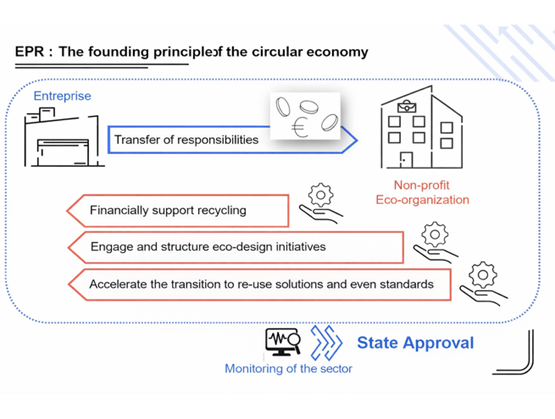
Two compliance pathways are presented in the webinar: the implementation of an individual system or the transfer of responsibility to an approved eco-organisation. For professional packaging, this second option is expected to play a central role in the collective structuring of the sector.
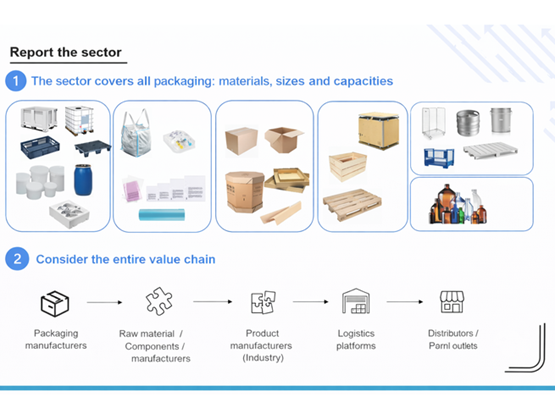
The webinar highlights a key point: professional packaging is not limited to bulky or highly specific formats. All materials are concerned, as is the entire value chain, from manufacturing to logistics, including distribution and industrial uses.
Changes in regulatory classification are another important aspect. The traditional distinctions between primary, secondary and tertiary packaging are set to disappear, replaced by a functional approach based on sales, grouping and transport packaging. This shift is reshaping how companies must analyse and categorise their packaging within the EPR framework.
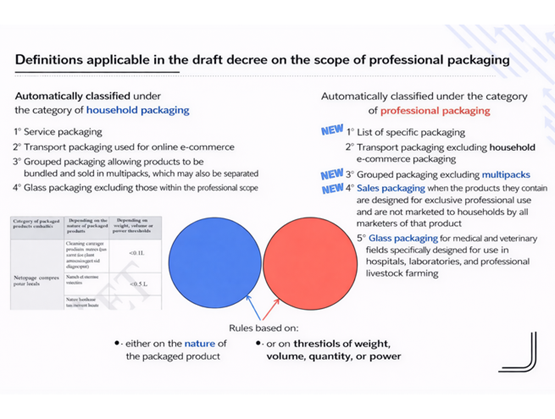
Classification is no longer based solely on the end user, but on the typology and use of the packaging.
When the nature of the product alone is not sufficient to make a distinction, specific criteria such as volume, weight and quantities help determine the applicable scope. This methodology aims to secure declaration practices and limit divergent interpretations between stakeholders.
On this point, Domitille Derennes explains that “the logic is evolving: we no longer reason solely in terms of final destination, but based on the intrinsic characteristics of the packaging itself.”
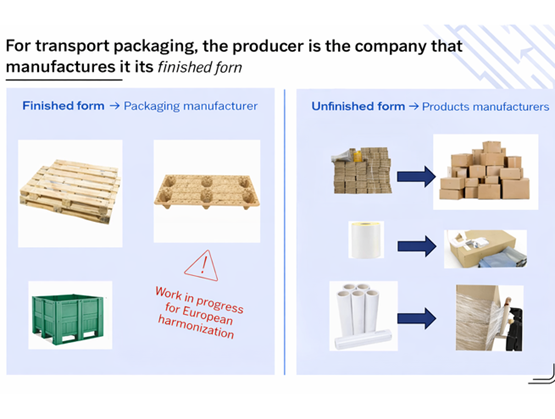
The webinar also provides key insights into the issue of responsibility, particularly with regard to transport packaging. A distinction is made between transport packaging already in its “final form” and packaging that only acquires its function at the point of use.
This distinction determines how the responsible party is identified within the value chain. As Domitille Derennes summarises, “it is essential to distinguish between the physical manufacturer of the packaging and the manufacturer of the packaged product, as this distinction is what makes it possible to identify responsibility under EPR.”
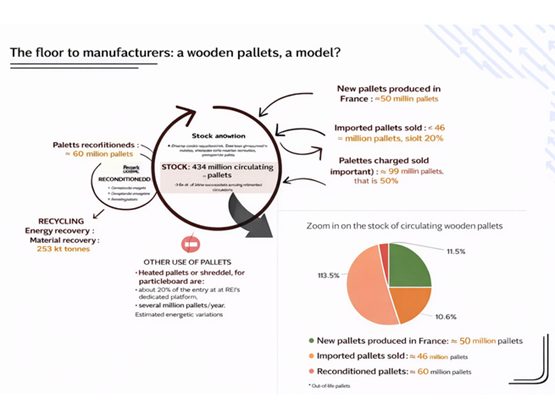
Léa Charron’s contributions highlight the specific characteristics of the wood sector, where reuse and reconditioning have long been embedded in industrial practices. “In the pallet industry, reuse has existed for decades and is based on already well-structured economic models,” she points out.
She also stresses that “the main challenge of EPR will be to improve traceability and the visibility of flows, without destabilising practices that are already working.” The webinar therefore underlines a shared intention to preserve existing balances while strengthening the overall governance of the sector.
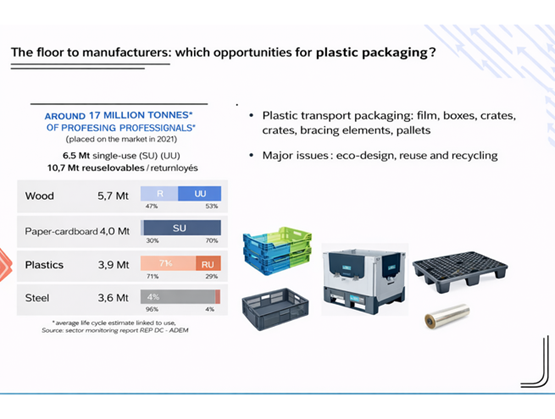
On the reusable plastic packaging side, Gautier Legrand highlights the need for a collective approach. “Standardisation and harmonisation are essential levers for achieving the objectives set by regulation,” he explains.
He nevertheless points to a key structural limitation: “If standardisation comes at the expense of product protection, the overall environmental impact becomes counterproductive.” He therefore stresses the importance of the product–packaging pairing, which must remain central to technical decision-making.
Traceability and timelines: preparing now
Finally, the replay emphasises traceability as a cornerstone of the future EPR framework for professional packaging. It underpins flow monitoring, performance measurement and the achievement of regulatory targets.
As for the timeline, operational implementation is announced for this year, with a start date envisaged from 1 July 2026. The message delivered throughout the webinar is clear: without waiting for all regulatory texts to be finalised, companies have every interest in beginning internal mapping and structuring work now.
Through this webinar, ALLFORPACK EMBALLAGES PARIS provides a solid foundation for understanding, helping packaging stakeholders anticipate a regulatory framework set to become a lasting part of their practices.
Join us from 24 to 26 November 2026 at Paris Nord Villepinte to explore the regulatory, industrial and economic challenges facing the packaging sector.
Watch our webinar replays