
DEPOSIT RETURN: THE BEVERAGE INDUSTRY FACES THE 2029 DEADLINE

Bottlers, preform manufacturers, recyclers and machinery manufacturers will come together at ALLFORPACK EMBALLAGE PARIS, from 29 June to 1 July 2027, to prepare for this deadline.
The issue of deposit return has regularly returned to public debate in recent years. The decision taken in September 2026 opens a new chapter. For the beverage packaging industry, the implications go beyond the political debate. They affect the availability of recycled material, production-line capacity, bottle design and investment schedules, within a European framework that sets its own deadlines.
Deposit return: what the government announced on 4 September
In a statement from the Ministry for Ecological Transition, Mathieu Lefèvre, Minister Delegate for Ecological Transition, and Françoise Gatel, Minister for Territorial Planning and Decentralisation, presented the conclusions of three months of consultation. The deposit-return scheme for recycling will be introduced only in local authorities that choose to participate, with priority given to those with the lowest collection rates. No mandatory scheme will be imposed, in order to respect decentralised powers.
The ministry bases this decision on a set of figures. In 2024, the recycling rate for plastic packaging reached 25.7% in France, while the rate for plastic bottles stood at 58.3%, placing the country among the lowest performers in the European Union. Differences between territories are significant. Nearly 230 intermunicipal authorities, representing more than 11 million inhabitants and mainly located in rural areas, already achieve a 77% collection rate. By contrast, nearly 45 intermunicipal authorities, representing more than 14 million inhabitants and mainly located in urban areas, remain below 35%.
Deposit return remains one of the twelve levers of the Plastics Plan, approved in May by the Ecological Planning Council. Consultation is continuing on all of these measures, with deposit return now taking a voluntary, locally based form.

The PPWR maintains the 2029 deadline
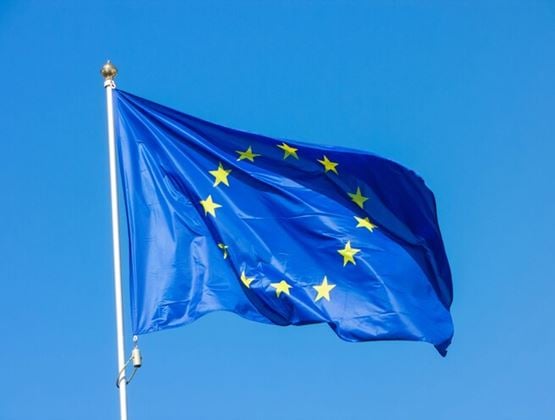
The European framework remains unchanged. Article 50 of Regulation (EU) 2025/40 requires Member States, by 1 January 2029, to ensure the separate collection of at least 90% by weight of single-use plastic bottles and metal beverage containers of up to three litres through deposit-return systems. A Member State may be exempt from this obligation if it achieves a collection rate of 80% in 2026 and notifies an implementation plan by 1 January 2028 at the latest. This exemption no longer applies if the collection rate remains below 90% for three consecutive years.
For France, the gap remains significant. The trade association Elipso, which represents manufacturers of plastic and flexible packaging, estimates the separate collection rate at 56% in 2026. According to the organisation, France therefore remains required to introduce a deposit-return system for recycling single-use bottles by 1 January 2029. This timetable comes on top of the obligations under the PPWR, which has applied since 12 August 2026 and imposes direct requirements on companies.
Local authorities and industry, two views of the same objective
Associations representing elected local officials welcomed the decision with relief. According to France urbaine, speaking alongside the Association of French Mayors, Intercommunalités de France and the Cercle national du recyclage, this “false deposit-return scheme” would not have helped develop reuse, sufficiently improve recycling or reduce the amount of plastic used. France urbaine also cites a joint IGF and IGEDD report, made public on 17 August, which concluded that a deposit-return scheme was not an appropriate response for improving plastics recycling overall. Local elected officials support 14 proposals focused on reducing the number of bottles, promoting tap water and reuse, expanding sorting practices and increasing producer responsibility.
Industry takes a different view. Elipso believes this postponement merely delays an inevitable requirement. Its Managing Director, Gaël Bouquet, is calling for an effective, economically sustainable deposit-return scheme developed with the entire value chain. The organisation is calling for immediate work on the parameters of the future system: its scope, interaction with existing collection systems, governance, financing, material take-back and outlets for recycled material.
rPET quality, an industrial challenge in its own right
Beyond the collection rate, material quality is just as important. According to Elipso, rPET from bottles collected through household recycling bins does not yet fully meet the requirements of certain applications. Improving collection must therefore go hand in hand with better quality and greater availability of recycled material.
This issue is becoming strategic for companies placing products on the market. According to the European Commission’s PPWR FAQ, single-use PET plastic packaging intended for food contact will have to contain 30% recycled material from 2030. Recycled plastics used in contact with food, including imported materials, must also comply with Regulation (EU) 2022/1616, which notably requires separate collection and third-party certification of sorting and recycling operations. For manufacturers of preforms and bottles, securing a supply of food-grade rPET therefore remains a central issue, regardless of the final form taken by the deposit-return system.
Reuse and cans: the other parts of the issue
The debate over deposit return for recycling does not cover the full range of obligations. The European Commission notes that the PPWR also sets reuse targets for beverage packaging, as it does for transport and e-commerce packaging. Article 50 also covers metal beverage containers, not just plastic bottles.
The deposit-return scheme for reuse is also moving forward. The ReUse trial, carried out in four regions, delivered modest results after one year, but the model was considered viable ahead of a nationwide rollout planned for 2027. The economic barriers and industrial levers of this model are detailed in the overview of packaging reuse in France.
June 2027, a key date to prepare for the deadline
Whatever form is ultimately adopted by 2029, whether stronger collection, a localised deposit-return scheme or a national system, bottling lines, materials and collection equipment will have to adapt. ALLFORPACK EMBALLAGE PARIS will bring the industry together from 29 June to 1 July 2027 at Paris Expo Porte de Versailles, Hall 1. The show aims to strengthen the presence of machinery in operation, and seeing a production line running often remains the best way to validate an investment.
Beverage industry professionals will find relevant suppliers in the industry sectors dedicated to Machines & Packaging Solutions and Packaging & Materials, bringing together blow-moulding machines, fillers, preform manufacturers and recycled-material suppliers. The Re-Génération exhibition area will be dedicated to reusable, recyclable and compostable solutions. A place to compare collection scenarios with the realities of production lines, eighteen months before the European deadline.
Image credits:
KATRIN BOLOVTSOVA - Pexels
Alexey Larionov - Unsplash