
MACHINES AND PACKAGING RECYCLABILITY: WHEN THE DIVERSITY OF PLASTICS COMPLICATES SORTING

Packaging recycling: machines designed for one material, not for all
For a long time, an extruder or an industrial washer was sized to process a homogeneous flow. Plastics processors worked with virgin materials and controlled their composition. Recycling changes the game. Incoming flows mix resins from various sources, unknown additives, inks, adhesives and food residues. As a result, a machine calibrated for bottle-to-bottle recycled PET cannot be transferred directly to the recycling of flexible polyethylene films.
This is one of the angles documented by the Process and Packing sector of ALLFORPACK EMBALLAGE PARIS: faced with growing regulatory constraints, machine builders must offer equipment capable of processing several types of material without losing output or recycled material quality.
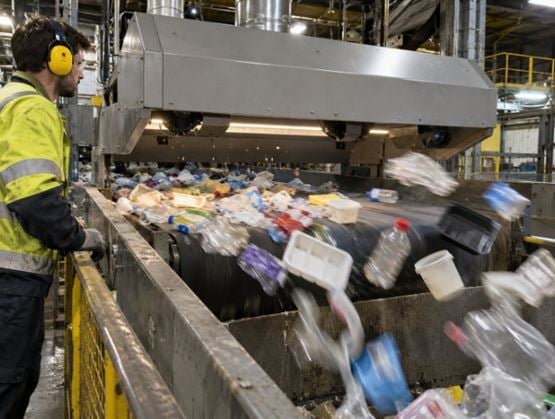
Optical sorting, the first line of defence
Even before processing, sorting determines everything. Near-infrared (NIR) optical sorting technologies can now identify the nature of a polymer in a few milliseconds on a conveyor belt. They distinguish HDPE from LDPE, food-grade PET from non-food PET, PS from PP. But they reach their limits with multilayer films, black packaging (which absorbs infrared radiation) and complex materials combining several resins that cannot be separated mechanically.
Sorting system manufacturers are developing complementary sensors: X-ray fluorescence to detect contaminants, machine vision for colour control, lasers to refine polymer discrimination. The aim is to obtain output flows pure enough to feed mechanical or chemical recycling lines.
The washing and extrusion test
Once sorted, plastics go through washing. This is where the nature of the polymer weighs most heavily. PET does not cope well with high residual moisture before extrusion: the flakes must be dried at precise temperatures to avoid degrading the molecular chain. Polyethylene tolerates water better, but its low melting temperatures make melt filtration trickier when contaminants with a high melting point are present in the flow.
Extrusion itself requires different settings depending on the resin. Screw geometry, the temperature profile along the barrel, pressure at the die head: each parameter is specific. Machine builders offer modular screws and quick profile-change systems to limit downtime when switching from one material to another. This trend can be seen in the solutions presented at recent editions of ALLFORPACK EMBALLAGE PARIS, particularly around PET recycling and bio-based plastics.
Flexible films, a special case
Among the plastic flows that are hardest to process, flexible films hold a special place. Their low weight makes them sensitive to static electricity, which disrupts sorting and conveying systems. Their high specific surface area complicates drying after washing. And their tendency to tear or wrap around mechanical parts calls for specially designed grippers and blades.
The European Packaging and Packaging Waste Regulation (PPWR) sets recyclability and recycled content targets that directly concern these materials. Machine builders are working on decontamination and purification solutions suited to multilayer films, with selective dissolution technologies that separate the different layers before recycling. These processes, still rare on an industrial scale, are attracting significant investment in Europe. The articles published on PPWR issues and on packaging and materials detail this regulatory framework.
Recyclability: towards multi-material machines?
Faced with this complexity, machine builders are exploring two paths. The first is advanced specialisation: lines designed for a single type of material, optimised to the extreme, capable of producing recycled material of sufficient quality for demanding uses (food and medical packaging). The second is flexibility: modular, reconfigurable equipment able to switch from one flow to another without lengthy mechanical intervention.
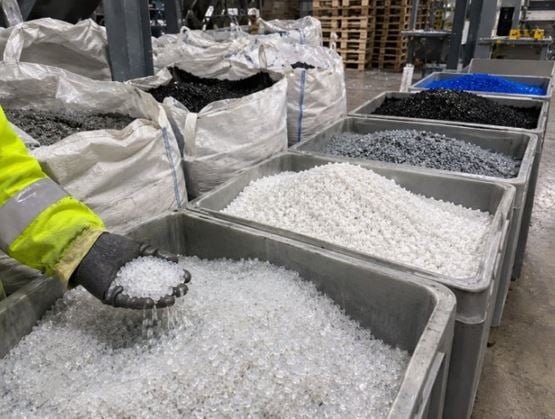
These two approaches are not mutually exclusive. They meet different market realities. A large recycling operator collecting a standardised flow of PET bottles will favour a specialised high-throughput line. A manufacturer that wants to process its own production scrap, made up of several resins depending on the products made, will rather need flexibility.
These questions are on the programme of ALLFORPACK EMBALLAGE PARIS, whose next edition takes place from Tuesday 29 June to Thursday 1 July 2027 at Paris Expo Porte de Versailles.